



Succession Planning
You’ve poured years into building your business — but what happens when it’s time to step away? Whether you’re planning to retire in the next few years or simply want to understand your options, this guide will help you take the uncertainty out of succession planning.
You’ll walk away knowing where to start, what pitfalls to avoid and how to protect the legacy you’ve built.
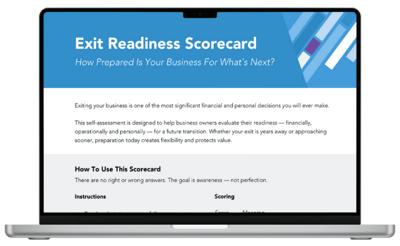
Read the Full Guide Below

Don't Have Time To Read Now?
Exit Planning Timeline
Exit Planning Timeline: 10 Years To Exit
Most business owners don’t wake up one day ready to exit — and the most successful exits are rarely accidental. They’re the result of years of thoughtful planning.
This timeline provides a high-level roadmap of what business owners should be thinking about — and doing — as they move closer to a transition or sale. Whether your exit is 10 years away or much sooner, understanding the path ahead can help you make smarter decisions today.
Why Start 10 Years Out?
Exit planning is not just about selling a business. It’s about:
- Increasing flexibility and optionality
- Protecting and growing business value
- Reducing tax exposure
- Aligning the business with personal and retirement goals
Starting early allows owners to build value deliberately rather than reacting under pressure.
7-10 Years Before Exit: Laying the Foundation
At this stage, the focus is on strengthening the business and creating a long-term vision.
Key priorities include:
- Clarifying personal and financial goals for life after the business
- Understanding what drives value in the business
- Identifying risks that could limit future exit options
- Improving financial reporting consistency and accuracy
- Evaluating technology and operational systems
Why this matters
Decisions made early have the greatest impact on value — and the least disruption on day-to-day operations.
5-7 Years Before Exit: Building Transferable Value
This phase is about making the business less dependent on the owner and more attractive to future buyers or successors.
Key priorities include:
- Strengthening management and leadership depth
- Documenting processes and responsibilities
- Reducing customer and revenue concentration
- Tracking KPIs that demonstrate performance trends
- Beginning preliminary tax planning conversations
Why this matters
A business that can operate without its owner is easier to sell, easier to transition and often worth more.
3-5 Years Before Exit: Preparing for Market Readiness
Now the focus shifts toward financial clarity and credibility.
Key priorities include:
- Cleaning up financial statements
- Documenting owner add-backs and non-recurring expenses
- Considering reviewed or audited financials
- Getting a realistic understanding of business value
- Aligning exit timing with personal retirement planning
Why this matters
This is often when owners realize how buyers will view the business — and where adjustments can still make a meaningful difference.
1-3 Years Before Exit: Finalizing the Strategy
At this point, planning becomes more detailed and tactical.
Key priorities include:
- Finalizing the exit path (sale, succession, management buyout, etc.)
- Coordinating tax strategy with deal structure
- Preparing for due diligence
- Addressing remaining operational or reporting gaps
- Planning for post-exit income and cash flow
Why this matters
Well-prepared owners maintain control over timing, structure and outcomes — rather than reacting to buyer demands.
Exit Year & Beyond: Executing and Transitioning
The exit itself is just one milestone — not the end of the journey.
Key priorities include:
- Executing the transaction or transition
- Managing tax obligations and liquidity
- Transitioning leadership and relationships
- Implementing post-exit financial and estate planning
- Adjusting to the emotional and lifestyle changes of stepping away
Why this matters
A successful exit is measured not just by the transaction, but by what comes next.
WHAT YOUR BUSINESS IS REALLY WORTH
What Your Business Is Really Worth — and Why It Matters Long Before You Sell
Many business owners assume they’ll figure out what their business is worth when they’re ready to sell or retire. In reality, waiting until the last minute often leads to surprises — and missed opportunities.
Understanding your business’s value isn’t just about selling. It’s about making smarter decisions today that protect what you’ve spent years building.
Here's a straightforward guide to the basics every owner should know.
What Actually Drives the Value of a Business
While revenue and profits matter, they’re only part of the picture. Buyers and investors look at a combination of financial performance, risk and sustainability.
Some of the biggest value drivers include:
- Consistent, reliable earnings: Predictable performance is often more valuable than occasional spikes
-
Strong cash flow: Cash flow tells buyers how the business actually operates day to day
-
Customer and revenue diversification: Heavy reliance on one customer or contract can reduce value
-
Owner independence: Businesses that can operate without the owner’s daily involvement are typically more attractive
-
Clean financial reporting: Accurate, well-organized financials increase buyer confidence and reduce uncertainty
Value isn’t just about how much money the business makes — it’s about how dependable and transferable that income is.
Common Myths About EBITDA Multiples
One of the most common questions owners ask is “What multiple will my business sell for?“
While EBITDA multiples are often discussed, relying on them alone can be misleading.
Common myths include:
- “All businesses in my industry sell for the same multiple.”
- In reality, two similar businesses can sell for very different values based on risk, systems and growth potential
-
“A higher multiple automatically means a better business.”
-
Buyers pay higher multiples for lower risk — not just higher profits
-
-
“Online estimates or rules of thumb are close enough.”
-
These tools often ignore important factors that significantly impact value
-
Multiples are a result of valuation — not the starting point.
Why Internal Financials Aren’t Enough
Many owners rely on internally prepared financial statements to estimate value. While these reports are useful for running the business, they often don’t meet the standards buyers or lenders expect.
Potential issues include:
-
Inconsistent accounting methods
-
Personal or non-recurring expenses mixed into operations
-
Lack of documentation for owner add-backs
-
Limited historical trend analysis
Buyers want confidence that the numbers tell a clear, credible story. Reviewed or audited financial statements — along with professional business valuation — help remove doubt and reduce friction during due diligence.
When Should You Get a Formal Business Valuation?
A common misconception is that valuations are only needed right before a sale. In reality, the best time to get a valuation is years before you plan to exit.
A valuation can be helpful when:
-
You’re 5-10 years away from retirement
-
You want to understand how decisions today impact future value
-
You’re being approached by buyers or private equity firms
-
You’re planning for succession or ownership transition
-
You want a benchmark to measure progress over time
Think of a valuation as a planning tool — not a one-time event.
How a Valuation Helps Owners Make Better Decisions
A professional valuation doesn’t just provide a number. It helps owners:
-
Identify strengths and weaknesses that affect value
-
Prioritize improvements that offer the greatest return
-
Align tax and financial planning with long-term goals
-
Avoid rushed decisions under pressure
-
Enter negotiations informed and confident
Most importantly, it gives you control over timing, expectations and outcomes.
Final Thought: Knowledge Is Leverage
You don’t need to be ready to sell to benefit from understanding your business’s value. Knowing where you stand today allows you to plan intentionally, reduce risk and build options for the future.
A business valuation is often the first step toward a smoother, more successful transition — whenever that transition may be.

WHY RECONCILED FINANCIALS MATTER
Why Reconciled Financials Matter In Exit Planning — Long Before Selling
When business owners think about selling or transitioning their company, they often focus on timing, buyers and price. What’s easy to overlook is something far more fundamental: the condition of the financials.
Clean, credible financial information doesn’t just make a sale easier — it can directly influence how much a business is worth and how smoothly a transaction unfolds. And the best time to address potential issues isn’t when a buyer is already asking questions. It’s well before that.
Let’s talk about what “clean” financials look like. Businesses with solid financials have several qualities, including:
- A financial statement close process where accounts are reconciled on a regular basis
- There’s a good system in place to maintain contracts, invoices and receipts to substantiate the business’s activities
- There are controls in place, including regular review and scrutiny
This checklist highlights the financial areas that matter most when preparing for a future sale.
1. Revenue Recognition: Clear and Consistent
Revenue is one of the first areas buyers scrutinize. Inconsistent or unclear revenue recognition can create uncertainty — and uncertainty often lowers value.
What to review
-
When and how revenue is recorded
-
Consistency across reporting periods
-
Alignment with applicable accounting standards
-
Separation of recurring vs. non-recurring revenue
Why this matters
Buyers want confidence that revenue trends are real and sustainable. Clean revenue reporting tells a clearer story about future performance.
2. Expense Normalization: Showing The True Cost of Operations
Expense normalization removes distortions that don’t reflect how the business would operate under new ownership.
Common areas to address
-
Above- or below-market owner compensation
-
One-time legal, consulting or repair costs
-
Discretionary spending tied to the owner
-
Owner add-backs should be documented and defensible
Most privately-held businesses include expenses that wouldn’t carry over to a new owner — such as personal vehicle costs, family payroll or one-time expenses. These are commonly referred to as owner add-backs. Buyers will look for clear identification of add-backs, consistent treatment year over year and documentation that supports why an expense is non-recurring or personal.
Why this matters
Undocumented or aggressive add-backs raise red flags while clean documentation builds credibility and helps support a stronger valuation. Normalized expenses help buyers understand the true earning power of the business — not just what shows up on the tax return.
3. Working Capital: Often Overlooked, Always Important
Working capital is a frequent source of confusion and negotiation during a sale.
Key considerations include
- Current assets vs. current liabilities
- Seasonal fluctuations
- Whether working capital levels are sufficient to run the business post-sale
Why this matters
Misunderstanding working capital can lead to last-minute purchase price adjustments or unexpected cash shortfalls after closing.
4. Audit or Review Readiness: Building Confidence Early
Many buyers, lenders and private equity groups expect reviewed or audited financial statements — even if they aren’t required today.
Questions to ask
-
Could your financials withstand outside scrutiny?
-
Are accounting policies documented and applied consistently?
-
Are records organized and easy to explain?
Why this matters
Reviewed or audited financial statements reduce friction, speed up due diligence and increase buyer confidence.
5. Financials Have a Role In the Due Diligence Process
Many business owners think due diligence begins only after they’ve agreed to sell their business. In reality, due diligence starts much earlier — often the moment a potential buyer begins evaluating whether your business is worth pursuing.
At the center of that evaluation are your financials.
Buyers use financial information to understand how the business actually operates, assess risk and determine whether the numbers support the story being told. Reconciled, consistent financials help buyers move forward with confidence. Incomplete or unclear financials can slow the process, invite skepticism or even derail a deal before it begins.
During due diligence, buyers typically examine:
- Historical financial statements and trends
- Revenue consistency and customer concentration
- Expense structure and profitability
- Cash flow and working capital needs
- Documentation supporting owner add-backs and adjustments
When financials are well prepared, due diligence becomes a confirmation exercise. When they are not, it turns into an investigation.
Preparing financials early allows business owners to address questions on their own timeline — rather than under pressure. It also gives owners the opportunity to explain anomalies, correct issues and present the business in a clear, credible way.
Why This Matters Even If You Aren’t Selling Soon
You don’t need to be actively planning a sale to benefit from clean financials. Getting your financial house in order can:
- Improve decision-making
- Reduce stress when opportunities arise
- Strengthen negotiating position
- Support tax and retirement planning
- Increase flexibility in timing your exit
Clean financials aren’t just about preparing for a transaction — they’re about running a stronger business.
Start Now, Not Later
One of the biggest mistakes business owners make is waiting until a buyer shows interest to clean up their financials. By then, time is limited and leverage is reduced.
Getting organized early allows you to address issues thoughtfully, spread improvements over time and protect the value you’ve worked hard to build.
Get Your Financial House in Order
If a future sale, transition or succession is even a possibility, now is the time to take a closer look at your financials. A proactive review can identify gaps, prioritize improvements and put you in a stronger position — whenever the time comes.
TAX PLANNING BEFORE THE SALE OF YOUR
The Best Tax Planning Happens Long Before the Sale of Your Business
For many business owners, taxes are one of the biggest unknowns when thinking about exiting their business. Questions like How much will I owe? or What can I do to reduce taxes? often come up — sometimes too late in the process to make a meaningful difference.
The reality is this: the most effective tax planning happens years before an exit, not months before a transaction. With the right preparation, business owners can protect more of the value they’ve built and avoid costly last-minute surprises.
Here are some key tax planning considerations to understand well before you exit.
Entity Structure: Does Your Business Still Make Sense?
The way your business is structured can have a major impact on how exit proceeds are taxed.
Common structures
- C corporations
- S corporations
- Partnerships and LLCs
Each structure has different tax consequences when ownership changes or a sale occurs. For example, some structures may lead to double taxation, while others may offer more favorable treatment depending on how the transaction is structured.
Why this matters
Changing an entity structure close to an exit can limit options or create unintended tax consequences. Reviewing structure early allows time to evaluate alternatives and plan strategically.
Capital Gains vs. Ordinary Income: Understanding the Difference
Not all income from a business sale is taxed the same way.
Some proceeds may qualify for capital gains treatment, while others may be taxed as ordinary income, depending on:
-
The type of assets being sold
-
How the purchase price is allocated
-
The structure of the transaction
Capital gains are often taxed at lower rates than ordinary income, which makes the distinction critical.
Why this matters
Without planning, more of the sale proceeds may be taxed at higher ordinary income rates — reducing your net after-tax outcome.
Timing Strategies: When You Exit Matters
The timing of a transaction can significantly affect the tax bill.
Timing considerations may include:
- Spreading income over multiple years
-
Aligning a sale with lower-income years
-
Monitoring changes in tax law
-
Coordinating exit timing with retirement or other life events
Why this matters
A well-timed exit can reduce taxes and improve cash flow — sometimes without changing the transaction itself.
Coordinating Retirement Plans With Your Exit
Your business exit and your personal retirement plan are closely connected — and should be planned together.
Key questions to consider:
-
Are retirement plans optimized before the sale?
-
Are contribution opportunities being fully utilized?
-
How will sale proceeds support long-term income needs?
Retirement planning can offer tax-advantaged ways to build wealth before an exit and provide stability afterward.
Why this matters
Coordinating business and personal planning helps ensure the exit supports your lifestyle goals, not just the transaction.
Why Early Tax Planning Creates Better Outcomes
Tax planning is most effective when it’s proactive — not reactive. Starting early allows business owners to:
-
Evaluate multiple exit paths
-
Adjust structure and timing thoughtfully
-
Coordinate tax, financial and retirement planning
-
Avoid rushed decisions under pressure
Even modest planning done well in advance can lead to meaningful tax savings.
Final Thought: Keep More of What You’ve Built
You’ve spent years building your business. Tax planning helps ensure you keep more of the value you’ve created — and transition on your own terms.
If exiting your business is part of your future, now is the time to start thinking strategically about taxes. The earlier the conversation begins, the more options you’ll have when it matters most.
COMMON EXIT PLANNING MISTAKES
Common Exit Planning Mistakes Owners Make
Business owners certainly don’t plan to make mistakes when exiting their business — they simply put off planning altogether. Years of running day-to-day operations often push exit planning to the bottom of the list, until circumstances force decisions faster than expected.
The good news? The most common exit planning mistakes are avoidable — if you know what to look for early enough.
Here are four pitfalls business owners often encounter.
1. Waiting Too Long to Start Planning
One of the biggest misconceptions about exit planning is that it only matters when you’re ready to retire. In reality, waiting until the last few years limits your options and reduces leverage.
When owners wait too long:
-
Value-building opportunities are missed
-
Tax strategies become limited
-
Decisions feel rushed
-
Buyers gain the upper hand
Why this matters
Exit planning works best when it’s proactive. Starting early gives you time to improve the business, address weaknesses and choose the timing that works best for you — not the buyer.
2. Over-Reliance On the Owner
Many businesses are highly successful because of their owner — but that success can become a liability during a transition.
Warning signs include:
-
The owner is involved in every major decision
-
Key customer relationships depend solely on the owner
-
Processes live “in someone’s head” instead of on paper
Why this matters
Buyers place a premium on businesses that can operate independently. If the business can’t run without you, it’s often viewed as riskier — which can reduce value or slow down a sale.
3. Ignoring Tax Planning Until the End
Taxes are one of the most significant factors affecting how much an owner ultimately keeps after an exit. Yet tax planning is often postponed until a deal is already in motion.
Late-stage tax planning can result in:
-
Higher-than-expected tax bills
-
Fewer structuring options
-
Missed opportunities to reduce taxes legally and strategically
Why this matters
The most effective tax strategies require time. Starting early allows for thoughtful planning around entity structure, timing and income characterization — all of which can significantly impact after-tax results.
4. Not Having a Personal Financial Plan
Some business owners focus entirely on the transaction itself — without fully understanding what comes after.
Common oversights include:
-
Not knowing how much income will be needed post-exit
-
Assuming the sale alone will fund retirement
-
Failing to coordinate personal and business planning
Why this matters
A successful exit isn’t just about selling the business — it’s about ensuring long-term financial security and peace of mind. Without a personal plan, even a strong sale can leave owners feeling uncertain or unprepared.
The Cost of These Mistakes
Individually, these missteps may seem manageable. Together, they can lead to:
-
Lower valuation
-
Unfavorable deal terms
-
Higher taxes
-
Stressful, rushed decisions
Most importantly, they can take control away from the owner at a critical moment.
Final Thought: Awareness Is the First Step
Exit planning isn’t about predicting the future — it’s about preparing for it. Recognizing these common mistakes early gives you the opportunity to avoid them and create a smoother, more intentional transition.
Whether your exit is years away or closer than you think, the best time to start planning is sooner than most owners expect.
BUSINESS SUCCESSION OPTIONS
Business Succession Options Explained: Which Option Is Right for You?
When business owners think about succession, many assume there’s only one outcome: selling the business to an outside buyer when it’s time to retire. In reality, there are several viable paths — and the right one depends on your goals, your business and your timeline.
Understanding your options early gives you flexibility. Waiting until the last minute often limits choices and increases stress.
Below is a high-level overview of the most common succession options, along with their pros, cons and planning considerations.
Third-Party Sale
A third-party sale involves selling the business to an external buyer, such as a strategic buyer or private equity firm.
Pros
-
Often maximizes purchase price
-
Provides liquidity at closing
-
Allows for a clean exit in many cases
Cons
-
Lengthy and intensive due diligence
-
Less control over the future of the business
-
Possible ongoing involvement during transition
Planning complexity: high
Requires strong financial reporting, valuation, tax planning and transaction readiness.
Management Buyout (MBO)
In a management buyout, the business is sold to key employees or the existing management team.
Pros
-
Continuity of leadership and culture
-
Buyers already understand the business
-
Often a smoother operational transition
Cons
-
Financing may be more complex
-
Sale price may be lower than a third-party sale
-
Owner may need to stay involved longer
Planning complexity: moderate to high
Requires financial structuring, leadership development and careful tax planning.
Family Succession
Family succession involves transitioning ownership to children or other family members.
Pros
-
Preserves family legacy
-
Maintains long-term control within the family
-
Often aligned with personal values
Cons
-
Emotional and relationship challenges
-
Not all family members may be ready or willing
-
Balancing fairness among heirs can be difficult
Planning complexity: high
Requires coordination between business planning, tax strategy, estate planning and family governance.
Employee Stock Ownership Plan (ESOP)
An ESOP allows employees to become owners through a qualified retirement plan.
Pros
-
Provides liquidity for the owner
-
Preserves company culture
-
Potential tax advantages in certain situations
Cons
- Not suitable for all businesses
- Ongoing regulatory and administrative requirements
- Valuation and compliance complexity
Planning complexity: high
Requires specialized advisors, formal valuations and long-term administrative oversight.
How to Choose the Right Path
There’s no universally “best” succession option. The right choice depends on several factors, including:
-
Your personal and financial goals
-
Desired level of involvement after exit
-
Business size, profitability and structure
-
Management strength
-
Family dynamics
-
Tax considerations
Many business owners benefit from exploring multiple options before committing to a single path.
Why Early Planning Matters
Succession options don’t appear overnight — they’re created through planning. Starting early allows you to:
-
Build leadership internally
-
Improve business value
-
Structure ownership transitions thoughtfully
-
Align tax and estate planning
-
Maintain control over timing and outcome
Waiting too long often forces owners into a single path — even if it isn’t ideal.
Final Thought: Options Create Confidence
Succession planning isn’t about choosing an exit today — it’s about understanding your options so you can make informed decisions when the time is right.
The earlier you explore your options, the more flexibility and peace of mind you’ll have.
About The Author
Daniel Larson, EA
Dan guides business owners through every stage of exit planning — from preparing for due diligence to minimizing tax liabilities when it’s time to transition or sell. He loves helping owners “put the pieces together” to protect the value they’ve built. Learn more about Daniel here.

Gross, Mendelsohn & Associates provides accounting, audit, tax, technology and consulting services to businesses, families and nonprofits throughout the Mid-Atlantic area.